
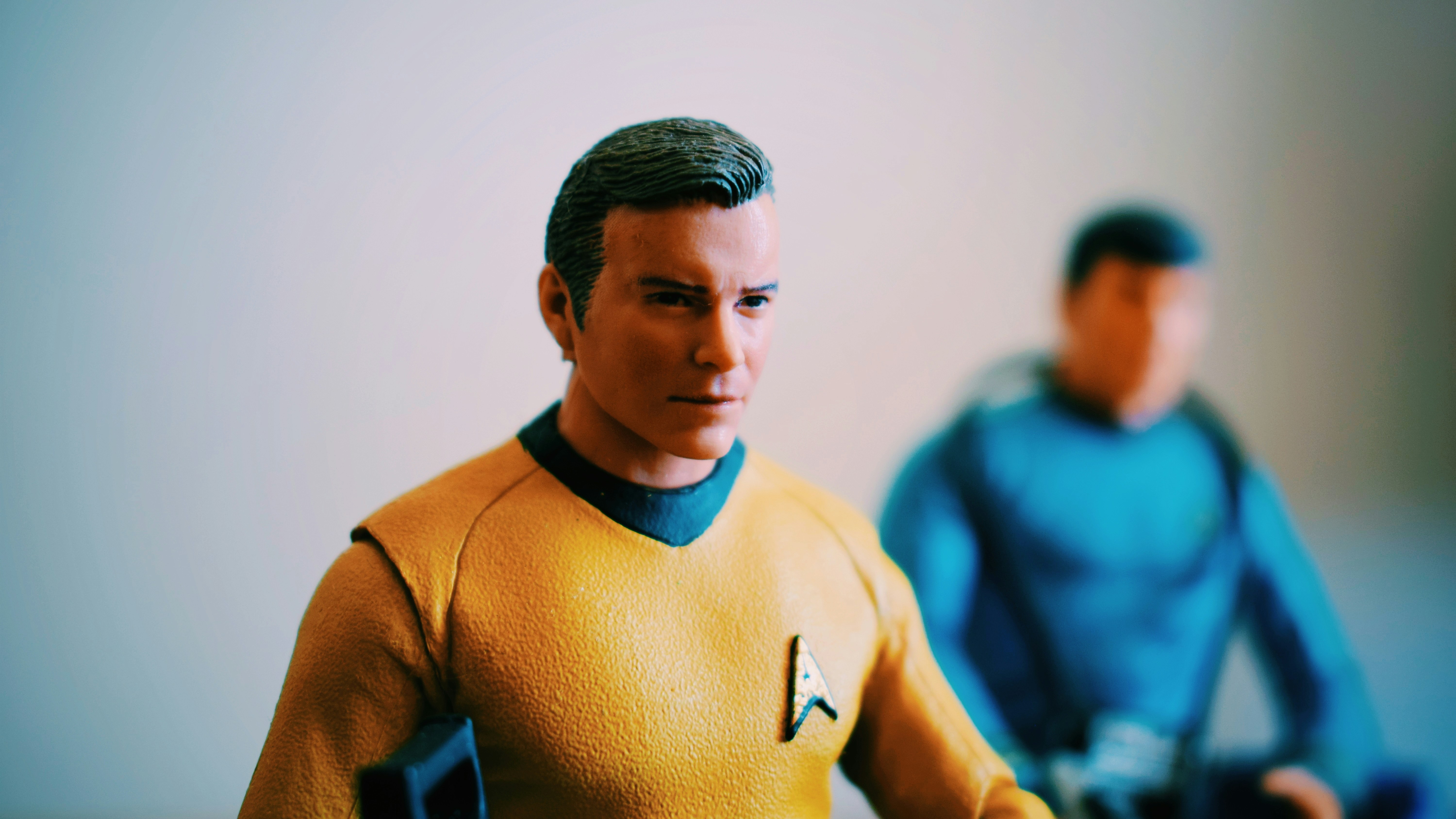
If you are a Trekkie then you will already be familiar with the Kobayashi Maru.
If Star Trek isn’t your bag then let me explain.
In one of the episodes there is a combat training exercise, a no-win scenario, which simulates a stranded civilian star ship that must be rescued from enemy space.
But there is a problem – the mission is actually impossible and any legitimate attempt to rescue the Kobayashi Maru results in failure.
So, why do it?
The simulation is not a test of tactical ability. It is intended as a test of character and the capacity to recognise defeat when it is inevitable and act with composure. The test’s real value lies in the way it forces Starfleet cadets to face death.
In the face of certain failure, we act with ataraxy.
As Spock (the test’s programmer) says,
The purpose is to experience fear; fear in the face of certain death, to accept that fear and maintain control of one’s self and one’s crew. This is a quality expected in every Starfleet captain.
Famously James T. Kirk was the only person to ever beat the Kobayashi Maru by reprogramming the simulation. Another way of saying this is cheating but I’d like to think of it as original thinking.
The Kobayashi Maru Test is actually a useful thought experiment in how we approach cancer.
Some would say that cancer is a no-win situation as it is a formidably complex and multi-faceted adversary in all its many forms, each with a unique set of challenges.
Although there has been considerable progress in treating the diverse spectrum of different cancer types, are we not really fighting a losing evolutionary battle?
The TracerX study says that cancer has an infinite ability to evolve and survive so we may just have to accept that we are really just in an unwinnable situation. It is unfixable and unmanageable and there is no shame in defeat.
If this is the case, then we engage with the enemy and go down with all the grace and self-command we can muster.
But then again we don’t.
We summon up our inner James T. Kirk and start to think outside of the box, reprogramme and start to cheat cancer. We break the rules – why? It’s the only thing that’s ever led to innovation.
We find ways to make the rescue.
We push boundaries.
We find the beacons of hope like immunotherapy and we keep on tweaking and progressing. Immunotherapy is a cheat code.
How many times have we given up on something and thought it was impossible? Well, the impossible is the possible that just has happened yet.
If we operate within the conditions set upon us and continue to echo the narratives of ‘impossible’, ‘unwinnable’ and ‘incurable’ then we will certainly fail.
If you are given a scenario in which you do not see a way out, do you sail into your so-called ‘fate’ or do you push harder to change the conditions?
I’m opting to change the conditions. I don’t like to lose. It took James T. Kirk three attempts to actually “beat” the Kobayashi Maru test.
Well, it might take us thousands of attempts to rescue ourselves but we have to keep trying. Take a look at what is happening in the world of preventive cancer vaccines.
James Tiberius Kirk didn’t believe in a no-win situation and neither do I. There will always be a way out.