
I’ve been living in crip time for the last 14 years.
That’s a long time.
Crip time.
It’s not the most elegant phrase but what is it?
Élaina Gauthier-Mamaril (2024) says,
To crip time is to experience a non-normative relationship to linear, chronological time, development, and progress. It means creating alternative ways of navigating an ableist world.
That’s quite the mouthful so let’s say it another way.
When you have cancer, time takes on a new shape. The pace is different. The tempo is different. There are new rhythms to get used to. The ‘rules’ have changed.
If you want to go all Shakespeare then Hamlet says it best when he says to Horatio, “Time is out of joint,” and with cancer, time is dislocated and not in the right place.
To Hamlet, the state of affairs (the “time”) in Denmark resembles a dislocated shoulder, “out of joint.”
For cancer patients, personal and social dislocation is the state of affairs, life is utterly disordered.
The things you could do before cancer often take more time and effort. Unfortunately the world around you just carries on ‘as normal’ and many things become harder as a result.
Society doesn’t deal well with cancer because cancer deviates from the highly celebrated status quo of ‘normality’.
Time is not inclusive. It pushes people out who can’t keep up or who require ‘adaptations’.
Organisations make all the right noises but the reality is, we are a massive inconvenience to the smooth running of everything else. Normative conceptualisations of time disable and marginalise.
Crip time creates an understanding of time that differs from ‘normal ableist time’ and unravels the social stigma of illness and “I don’t have time for this!” culture we live in.
As anyone with cancer will tell you, time is diffracted and re-assembled, it is fuzzy, fractured and frenzied, it is explicitly precarious and elusive, it is rethreaded and criss-crosses the past, present and future and creates it’s own dimension. Time swallows itself, burps uncertainty but also renews hope, reignites dreams, and releases potential.
Cancer time is crip time. It is time exploded and bent out of shape. You experience time differently. It’s the time zones you find yourself in because of your illness. It’s a huge shift in mindset.
It is a way of existing according to what you are now able to do. It is reframing your own perception of what ‘disability’ is.
Crip time can be attending hospital appointments (which always take time), waiting for scan results, being pushed from pillar to post within the medical system, having treatment, recovering from treatment and preparing for treatment. Crip time is largely uncertain, unknown and out of our control. It is lost time.
It’s not all toxicity time though.
Crip time also refers to more positive aspects of cancer time. For example, you might have more time at your disposal because you aren’t working. This allows you to take trips, devote energy to hobbies and friends and enjoy being out of the rat race. It is rewriting the rules of living according to your time. Positively speaking, crip time is a flexibility and an expansion of time.
But where does this phrase come from?
‘Crip’ is a subversive play on the word ‘cripple’ coined by Robert McRuer. You might think that this is far from being politically correct as it is a historically disparaging term but it is being reappropriated and celebrated across different populations.
Crip time is a way of thinking about and understanding time in a way that acknowledges different lived realities.
Crip time is based on the idea of multiple needs, which in the case of cancer is complex. Cancer patients are not one big group of people all going through the same thing.
Different cancers have very different time zones and patients have incredibly different needs.
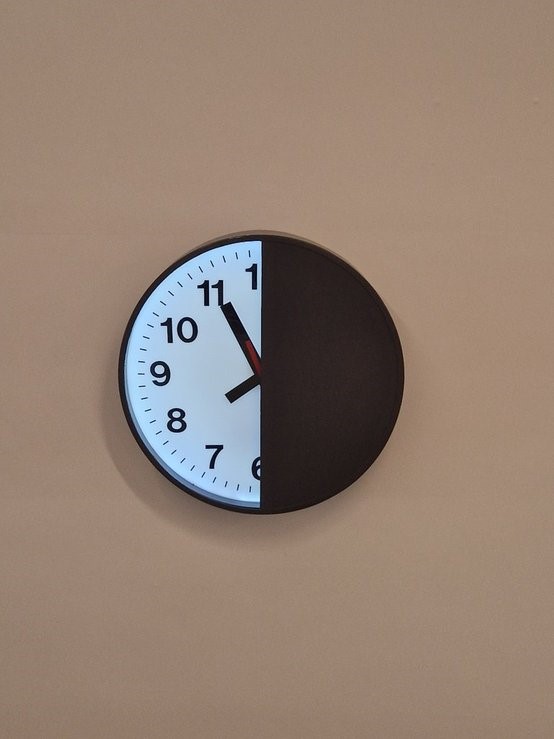
Cancer time is not a time you will recognise or understand unless you are living it. It has a very different clock face and what you don’t get is a high-quality quartz movement. Instead, the cancer clock has a movement that jumps around all over the place with hands moving at different speeds. The schedules are not what you expect. This is crip time.
What crip time does is expose the social and political injustices related to disability. Cancer is a disability I’ve been living with for 14 years and my fight continues.
Some of us are normalised and others are pathologised but it’s worth remembering that becoming disabled is only a matter of time for us all.
It is strange. I never expected to get an official disabled designation. I was a yogi, then later a cyclist, and later still, a runner, out in the countryside, around city circuits, chasing times, and personal bests. I am determined to start running again, to make time, to bend time to my will. Or maybe I’ll just amble for a while, then come home for a cup of tea and a Jaffa cake…
Go with whatever you fancy sir! Thank you for sharing. Time is ours and your time is precious. If it’s time eating a Jaffa with a cuppa then it’s time well spent.