
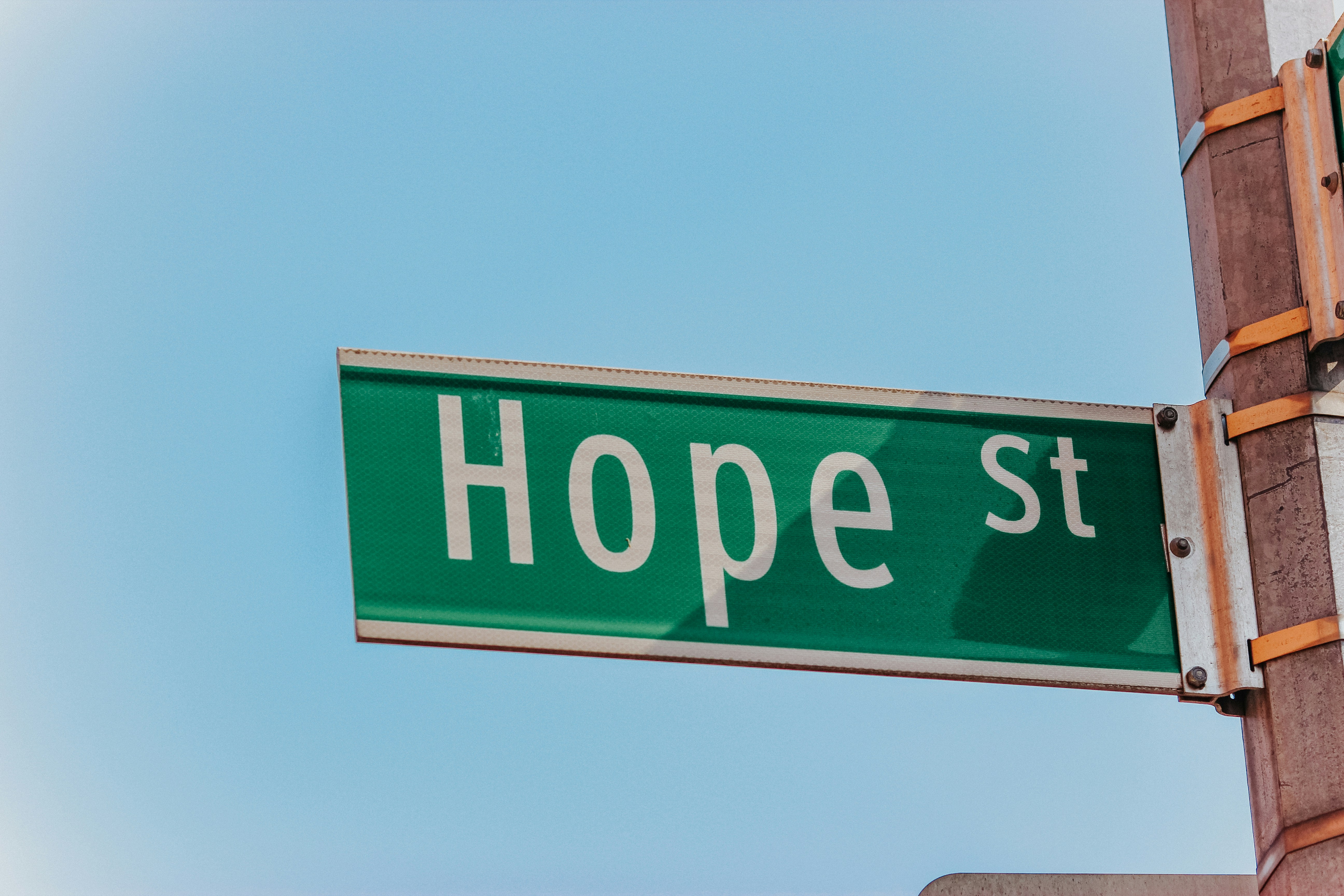
Hello, my name is John and I’m a hope-aholic. It has been 2 minutes since my last hopeful thought.
“Hope-aholic” (n.). Someone who never loses hope and has an unshakable faith that things will improve and get better.
Feminist icon Gloria Steinem is probably the person we can credit the word ‘hope-aholic’ to.
Described as a ‘hopeless hope-aholic‘, she has written about what hope means to her in the context of her global work in politics, human rights and a lifetime fighting against oppression.
A self-proclaimed ‘hope-aholic’ full of a controlled optimism about what lies ahead, she says,
I’m not just a dreamer, I’m a hope-aholic. After all, hope is a form of planning. If our hopes weren’t already real with us, we couldn’t even hope them….unless we make a place in our imaginations for what could be, there’s not much point in believing in anything.
You see, being a hope-aholic is an addiction and for me it certainly is. I maintain it with energy and enthusiasm every single day.
I am addicted to hope because I have incurable cancer and I hope to live as long as I possibly can. That’s not unreasonable for any of us, cancer or not.
To be addicted to something isn’t normally a good thing but in the case of hope it most certainly is. It is what I would regard as a ‘positive addiction’.
In his book, the psychiatrist William Glasser, claims that positive addictions “strengthen us and make our lives more satisfying.”
They also enable us to “live with more confidence, more creativity, and more happiness, and usually in much better health.”
Hope enhances life and hope as a positive addiction can help us grow stronger. Hope is the best self-help treatment we have available to us. It is something you choose to do and if you do it regularly enough, you can get hooked!
Glasser proposed positive addiction as a healthy behavioural addiction in contrast to the negative view of
drug and behavioural addictions.
Glasser’s six criteria for a positive addiction to any activity are as follows:
- It is something non-competitive that you choose to do, and you can devote approximately an hour per day.
- It is possible for you to do it easily and it doesn’t take a good deal of mental effort to do it well.
- You can do it alone or rarely with others, but it does not depend upon others to do it.
- You believe that it has some value (physical, mental, or spiritual) for you.
- You believe that if you persist at it you will improve, but this is completely subjective, you need to be the only one who measures the improvement.
- The activity must have a quality that you can do it without criticizing yourself. If you can’t accept yourself during this time the activity will not be addicting.
I think hope fits these criteria and so qualifies admirably as a positive addiction.
As a constructive addiction, hope leads to feeling good without negative consequences. It confers strength and confidence to the individual and can help promote effective living.
Hope is the habit of a happy life. The more hopeful we are the better able we are to handle the challenges, stresses and setbacks in life. It strengthens your mindset, encourages you and motivates you.
Hope is a wonderful thing to be addicted to. For me, hope and walking are two healthy habits I won’t be giving up any time soon!
Being a merchant of hope, I hope I’ve sold the concept of positive addictions to you.
If you are a cancer survivor like me, this stuff just sells itself.