
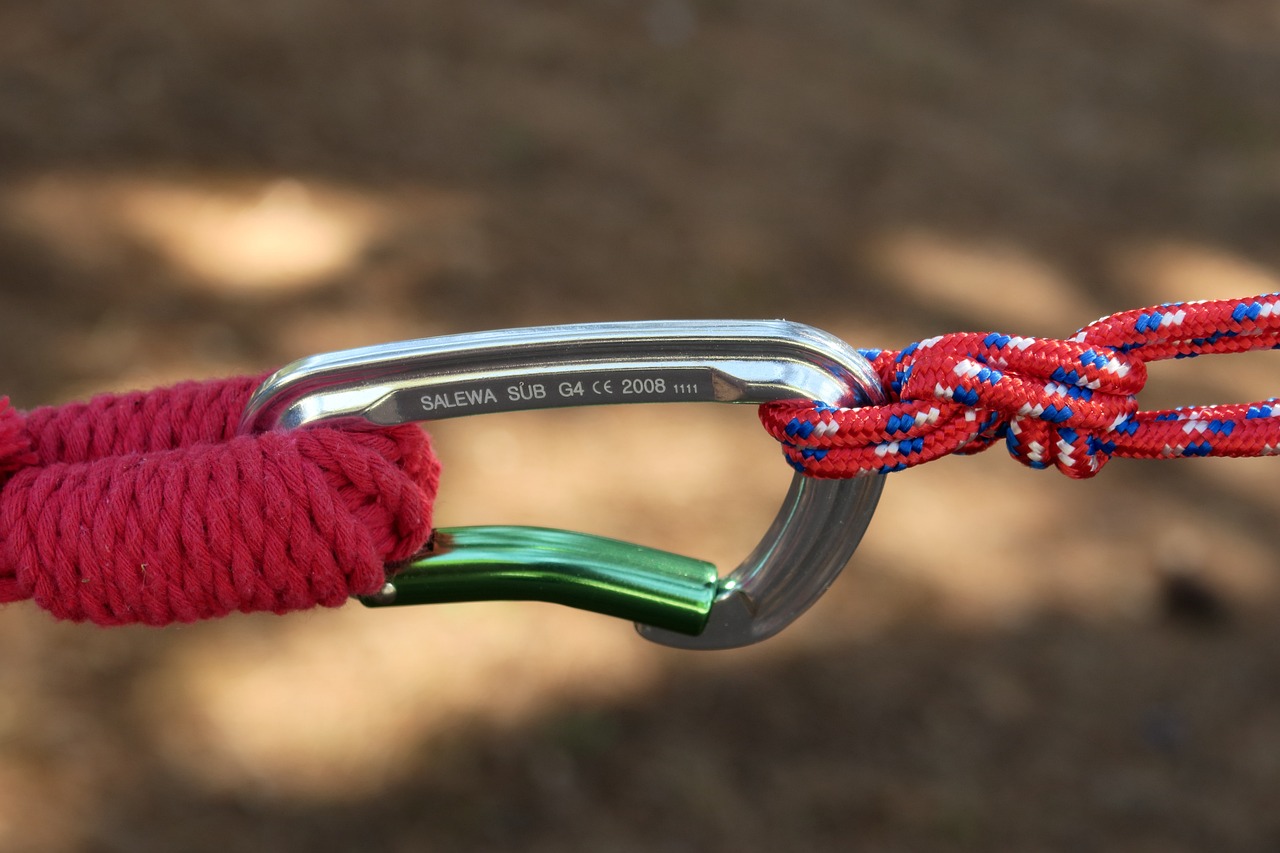
An essential piece of kit for any mountaineer or climber is the carabiner/karabiner.
This light and incredibly strong snap clip is a life-saver and an unsung hero.
A carabiner is a D-shaped or oblong loop of metal with a spring-loaded gate that opens and shuts.
It’s basically a coupling link with a safety closure used as a connection point and acts as a load-bearing tool for mountaineering and rock climbing.
Climbers connect their ropes to each other using carabiners, so they are tools designed to keep you safe.
There are loads of carabiners out there and come in a variety of different material combinations, sizes, shapes and colours.
Carabiners are a critical piece of equipment and climbing without them would be like hiking without hiking boots.
But we also have carabiners inside us.
The carabiner is also a key part of our mental gear.
I recently wrote on social media the following motivational message:
The acme of optimism is happiness and to reach it we need oxygen tanks of positivity, ropes of hope and carabiners of courage.
The carabiner is something we put our faith in. We trust it will not break. It’s got to be strong. It’s got to hold.
It is therefore part of our Personal Protective Equipment.
We too have to be those carabiners in order to get to the top of wherever we are going.
Just as the carabiner is the mainstay of rock climbing gear, our mental carabiner is the mainstay of a courageous mindset.
A carabiner is designed solely to carry equipment or it can be designed to hold your body weight.
Similarly, our mental carabiner has to be able to carry the weight of our mental baggage without snapping. It takes the strain and acts as a life support.
We all have a breaking point and the strength of our mental carabiners will vary but the carabiner needs to far exceed the strengths that would be generated by a falling climber when the carabiner is used correctly.
When you are emotionally overloaded, does your mental carabiner protect you when you fall?
We can’t afford to snap. We’ve got to hold firm.