
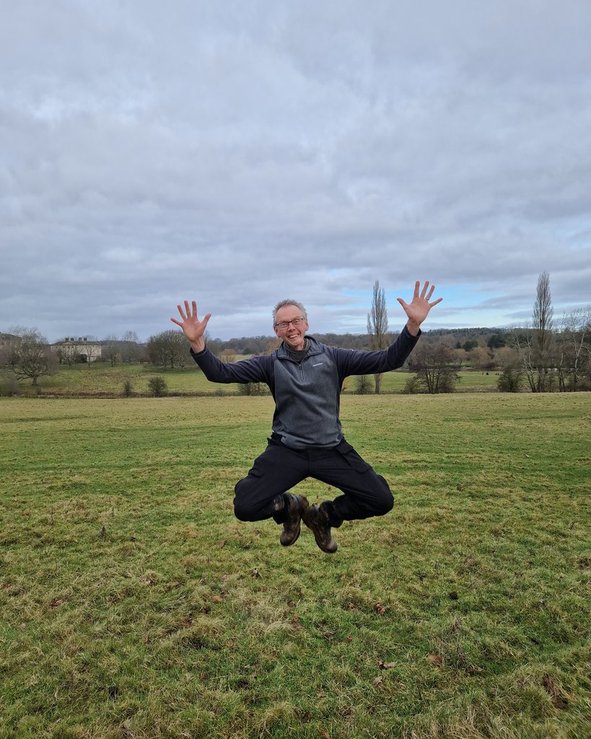
Exercise is an all-important component of healthy living and well-being.
But what about when you aren’t well?
When you have cancer then the last thing you feel like doing is star-jumps.
As a treatment regime kicks in then it really does bring you to your knees and the side-effects can be brutal.
When you’ve been poisoned by chemotherapy and burned by radiotherapy then moving is an effort and all you really feel like is curling up on the sofa with a blanket and doing nothing.
But doing nothing is not going to help.
When I was having chemo-radiotherapy, I made staying physically active a priority as it improved my symptoms and side effects. It did me the world of good.
As my energy levels began to pick up and I started to feel more human again, I was able to build in more activities too.
Exercise is encouraged by the medical world and exercise oncology is now seen more widely as a complementary part of the medical treatment of cancer patients across the cancer care continuum.
As Campbell et al (2019) note,
Exercise is an evidence-based intervention that improves psychosocial outcomes, physical fitness and function, and overall quality of life across cancer populations
In fact, there is plenty of research to support the benefits of movement and activity and every good reason to avoid inactivity.
Exercise is a simple and low-cost non-pharmacological intervention that is of great importance for cancer prevention, also improving the prognosis of cancer patients, promoting prolonged survival.
The value of exercise is clear but it is a long way from being a standard component of care in oncology.
For the most part, this is a self-help exercise.
On a personal level, I have motivated myself to self-administer a daily dose of activity with the core purpose of enhancing and boosting my immunotherapy treatment.
I have now made it a way of life and a key component in staying well. I make it a daily ritual to walk at least 5 miles. It’s a regime I stick to it even on treatment days.
By exercising day in and day out, I do what I can to keep ‘match fit’ and, as I see it, I have an obligation to provide the best possible bodily environment for immunotherapy to work.
Exercise and cancer do go together and although the amount of physical activity each patient can handle will vary, by keeping the pistons pumping you are doing yourself the best possible service.
Can exercise reduce cancer risk and support treatment? Yes it can!
Jones et al (2023) found that people diagnosed with cancer who regularly exercise reduced their risk of dying from all causes by 25% compared with people with cancer who did not exercise.
Exercise is medicine, exercise is treatment and it’s also a life-enhancer and a life-saver!
This is positive to read, just like your daily Twitter contributions! It makes good sense to me, and yet for those of us who no longer have access to functional energy ie who have no option but to pace, learn the acceptance of rest, and chronic irregular ability to move, exercise takes its place amongst days of not moving. You are definitely an inspiration. Thank you for sharing your insights, they are always appreciated.
Af