
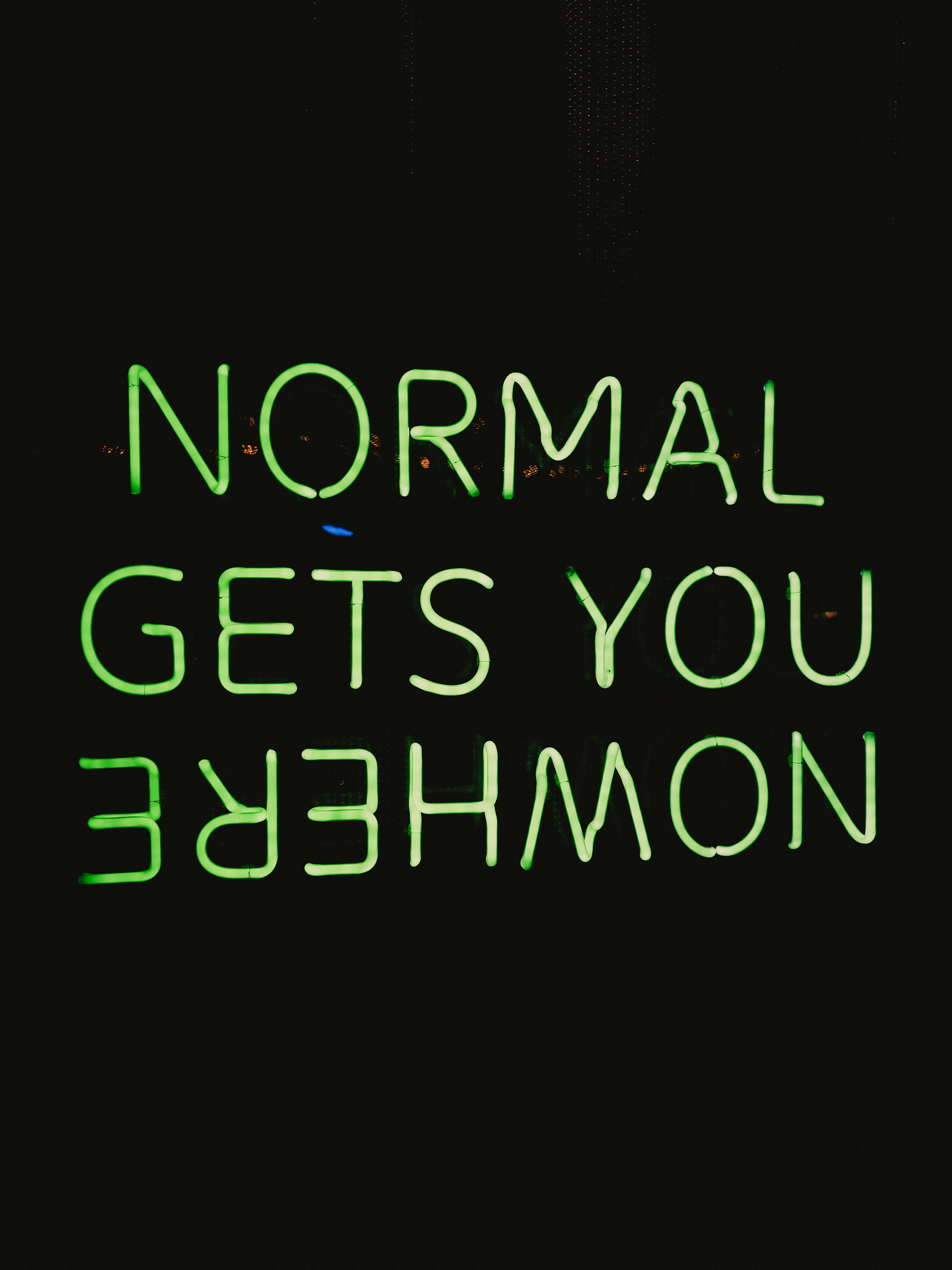
After a major health scare or a life-altering diagnosis, you will often hear medical professionals talk about finding your “new normal.”
It is a phrase I find infuriating because there is nothing normal about it.
After my latest health problems, I found myself once again on the receiving end of this well-worn expression.
In cancer, “normal” gets you nowhere. The old normal is gone, and the so-called new one offers no guidance only a label for survival that is already costing more than it should.
The phrase ‘new normal’ is often used by those saying it without actually being explicit about what it means. I get it, I understand it but the language is all wrong.
Let’s be clear: the situation you find yourself in is abnormal. Dressing it up with softer language doesn’t change that fact.
In my case, being told that I will almost certainly be nil by mouth for the rest of my life is not a “new normal.” It is a profound, permanent deviation from how the human body is meant to function. Yes, I must adapt. Yes, I must learn new ways of living. But adaptation is not the same as normalisation.
What is normal is eating and drinking orally—something around 99.9% of the world’s population does every single day without thinking. That is the baseline of human experience. Losing it is not a sideways shift; it is a rupture.
I challenge anyone to tell me that never eating or drinking again becomes normal because it doesn’t. Our bodies were never designed to be syringe-fed liquids through a plastic tube into the stomach. This is not an alternative lifestyle choice; it is a medical workaround for something that has gone badly wrong.
To call this a “new normal” feels less like compassion and more like convenience. A linguistic shortcut. A way of smoothing over a soul-destroying reality so it is easier to say, easier to hear, and easier to move past.
Some will say that it is about finding out what is normal for you now rather than “getting back to normal,” but it is not like that. This is not a recalibration within familiar limits; it is a forced departure from them. Nothing has shifted within range – the entire baseline has been removed – it is a permanent loss. The ‘new normal’ message implies a gentler transition than reality allows.
Let’s not pussyfoot around – some things should never be smoothed over. Some losses deserve to be named honestly. Adaptation may be necessary. Survival may demand it. But let’s not pretend that abnormal ever becomes normal no matter how long it lasts.
We know that those who use the phrase mean well, but meaning well is not the same as speaking well – and the difference matters.
There is also a quiet harm in the phrase “new normal” that rarely gets acknowledged. It risks minimising grief. When you tell someone this is their new normal, you subtly suggest they should stop mourning what has been taken from them. That the shock should fade faster. That acceptance is overdue. But grief does not run on clinical timetables, and loss does not evaporate just because it has become familiar.
Familiarity is not healing. Repetition is not acceptance. Endurance is not consent.
What often gets labelled as “normalisation” is, in reality, sustained effort. Relentless adaptation. Daily problem-solving. Constant vigilance. It is the unseen labour of staying alive in a body that no longer behaves as it once did. Calling that normal obscures the work involved and erases the courage required to keep going.
Language matters, especially in medicine. Words shape expectations, emotional permission, and how suffering is acknowledged.
When clinicians reach for “new normal,” it can feel as though the emotional reckoning is being outsourced to the patient: this is your life now—make peace with it.
But peace cannot be commanded. It has to be earned, and sometimes it never fully arrives.
I am not arguing against resilience or adaptation. I am living proof that both are possible. But resilience does not require denial, and adaptation does not require euphemism. We can be strong and honest. We can cope without pretending that what has happened is anything other than profoundly unfair.
Perhaps instead of “the new normal,” we need braver language – language that acknowledges disruption without minimising it. Language that says:
- this is brutal, this is unjust, and it demands more than anyone should have to give.
- this is pain without polish, loss without apology, and a cost that is too high.
- the demand is excessive, the loss is real, and none of it is deserved.
- this is clinically survivable, but humanly punishing.
- this demands more resilience than anyone should be expected to summon.
- this is hard, this is wrong, and it will demand more of you than it ever should.
Sometimes you just need someone to say that normal is dead, that adaptation is possible, but the price is severe and the effort required is disproportionate and unrelenting.
Sometimes you just need someone to say “this is s**t”.
That kind of honesty doesn’t weaken people. It respects them. It can strengthen them.
Because survival in an abnormal situation is not normality. It is defiance. It is endurance. It is a daily act of courage carried out in circumstances no one would ever choose.
Enjoyed reading this? Please consider donating to my GoFundMe and help support me through my own cancer journey: https://gofund.me/2a6d5199
Brilliantly written and an eye opener for anyone who deals with patients in a clinical setting.
Always learn from John.